

Tax Time Toolkit: Maximise Your Tax Return
July is here – time for WA's FIFO miners and construction crews to sort out their tax returns. It might not be your favourite job, but doing it early and accurately will save you hassle and could put more money back in your pocket. This no-nonsense guide breaks down the key deductions and tips for fly-in fly-out workers and blue-collar construction folks. We'll cover what you can claim, what you can't claim, common mistakes to avoid, and when to get a pro involved. Let's get into it.
Key takeaways
- Lodge early and accurately — you'll likely get your refund sooner and avoid last-minute stress.
- Normal home-to-site travel (including FIFO flights to your usual site) isn't deductible; travel between worksites or overnight work trips usually is.
- Tools, compulsory uniforms, PPE, sun protection and laundry of work clothes can be claimed when you paid for them yourself.
- Training, licence renewals and self-education that maintain or improve skills for your current job are deductible — initial qualifications to get a new job are not.
- FIFO workers based in non-remote cities generally can't claim the zone tax offset, even after 183+ days on site.
- Union fees, standalone income protection premiums (outside super) and tax agent fees are commonly missed deductions.
- Only claim what you paid for, keep receipts, be realistic about work-use percentages, and don't claim items your employer covered.
Deductions Explained
For FIFO Miners & Construction Workers
Travel between worksites or to a training session/meeting at a different site (log the kilometres and use the ATO cents-per-km or logbook method). Flights, accommodation and meals for short-term work assignments that take you overnight away from home — provided your employer didn't reimburse you.
Your normal commute from home to your regular work site, including FIFO flights from home to the airport or camp. Anything your employer pays for, reimburses, or covers with a Living Away From Home Allowance (LAFHA) — no double-dipping.
Keep a log and receipts for any work travel you claim, and remember the rule: if an employer allowance or reimbursement already covers it, you can't claim it as a deduction.
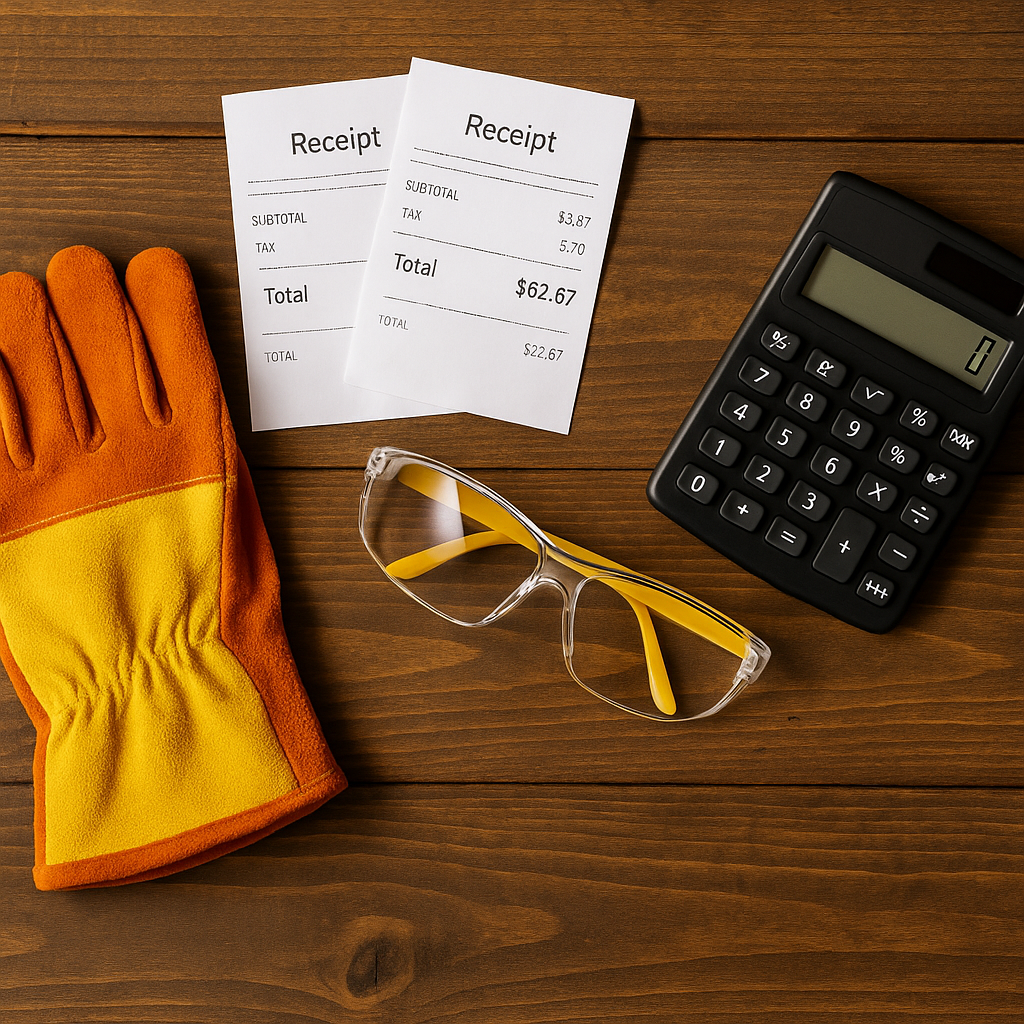
Tools and equipment you paid for to earn your income (items $300 or less are deductible immediately; pricier tools are depreciated). Compulsory uniforms with a logo or unique design, hi-vis shirts, overalls, steel-capped boots, hard hats, safety glasses, gloves, ear protection. Sun protection (sunscreen, sunglasses, broad-brim hats) used on the job. Repairs, maintenance and insurance for your tools. Laundry of work-only uniforms and PPE.
Ordinary clothes (jeans, generic shirts) you could wear off the job. Tools or gear your employer supplied or reimbursed. Laundry of personal clothing, or inflated claims that don't reflect what you actually spent.
Keep receipts for every tool and PPE purchase. The ATO accepts reasonable laundry estimates under $150 without receipts, but you should still be able to explain how you worked it out (e.g. loads per week × rate per load × weeks worked).
Courses, tickets and certificates that maintain or improve the skills you need in your current role — Working at Heights, Confined Spaces, First Aid, advanced welding, project management. Renewing existing work licences (e.g. High Risk Work Licence, forklift ticket). Self-education connected to your current job, including course fees, textbooks and stationery. Travel for approved work training your employer didn't cover.
The cost of getting an initial qualification that lands you a new job or new line of work — first White Card, first heavy rigid truck licence, or study aimed at a future career change. The ATO won't subsidise getting into the industry, only doing your current job better.
Keep every receipt for training and travel costs in case the ATO asks — and check whether a course relates to your current role before claiming it.
The zone tax offset if you genuinely live in a designated remote area (Zone A, Zone B, or a special area within Zone A) for at least 183 days in the tax year — typically construction workers who relocate for a project or miners who've moved their family to a remote region.
FIFO and DIDO workers based in Perth or another non-remote city — even after 183+ days on site. Since 1 July 2015, the offset is excluded if your normal residence isn't in the zone, regardless of how many swings you do.
Don't assume working FIFO in a remote area automatically gives you a tax break. Check the ATO's zone location list or calculator if you actually live in a remote town — otherwise skip this one.
Meals only when you're travelling overnight for work (stay within the ATO's "reasonable" daily limits and keep receipts). Laundry of work uniforms and PPE. The work-related portion of your mobile phone and home internet, based on a reasonable diary of usage (e.g. a 4-week sample showing what percentage was work). A fair share of a phone, laptop or tablet you bought partly for work.
Meals during a normal work day or on site (food is a private expense, even with long hours). 100% of your phone or internet unless you genuinely have a work-only device or plan. Laundry of regular casual clothes. Anything your employer paid for or refunded.
Use the ATO myDeductions app or a one-month log to back up phone/internet percentages, and only claim what you can substantiate. Small claims add up over a year — but only if they're realistic.
100% of union fees or professional association dues paid in the year (check pay slips or the annual union statement). Premiums for a standalone income protection policy held outside super. Fees paid to a registered tax agent or accountant to prepare last year's return (or online tax-software fees) — claimed as a cost of managing tax affairs. Subscriptions to trade journals related to your work.
Income protection premiums held inside your super fund, or bundled with life/TPD cover that pays a lump sum. Fees or insurance someone else paid on your behalf.
These deductions are often missed. Dig up your union statement, income protection premium summary and last year's tax agent invoice before you lodge — they're easy wins.
Best practice: Be reasonable, keep receipts (or photos of them), keep a logbook for vehicles, keep a usage diary for mixed-use items, and only claim what you actually paid out-of-pocket. Use the ATO's myDeductions app if paper isn't your thing.
Claiming a normal home-to-site commute or FIFO flights as work travel. Claiming items your employer supplied or reimbursed. Overstating work-use percentages on cars and phones. Claiming without receipts or evidence. Trying to write off conventional clothes, grooming, fines, or non-work items.
Apply the "pub test": if you couldn't comfortably tell your mates you claimed it without them thinking it's dodgy, it won't pass the ATO test either. If unsure — get advice rather than hoping for the best.
Getting It Done Right (and Early!)
The Australian tax year ends on June 30, and by early July you usually have what you need (PAYG summaries, etc.) to lodge your return. There's no reason to procrastinate. Lodge early and you'll likely get your refund sooner — and if there's any issue, you have time to sort it out before deadlines. Plus, the earlier you do it, the fresher the year's expenses are in your mind and in your records.
If your tax situation feels complex or you're not 100% confident, consider getting professional help. There's no shame in calling in an expert — a good tax agent can find deductions you didn't know about and make sure you're fully compliant with ATO rules while maximising your refund.
Wrapping up: Tax time doesn't have to be a headache. Know your deductions, avoid the common pitfalls, keep those receipts, and don't be afraid to ask for help. Do it once, do it properly, and then get on with what you do best — keeping WA running with your hard work.
Sources
The above information was compiled from Australian Taxation Office guidelines and reputable tax professionals, tailored to the needs of WA FIFO and construction workers. Always consider your personal situation or consult a tax adviser for specific advice.
- 2025 Tax Warning: ATO Cracks Down on Invalid Work-Related Deductions
- Tax Claim Rules and Deductions for Fly-In and Fly-Out Workers – H&R Block Australia
- Ultimate Guide to Tax Deductions for Individuals in 2024–25
- Top 6 Tax Deductions for Construction Workers & Tradies
- Income Protection Insurance – Australian Taxation Office